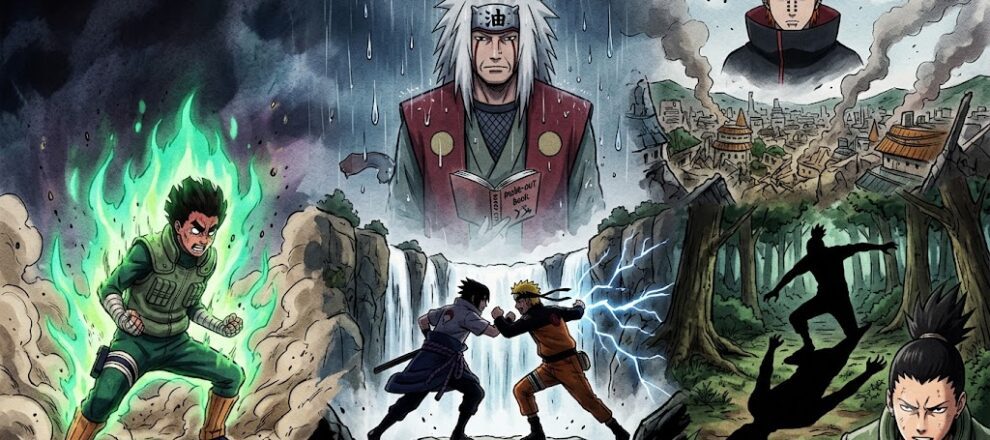
Masashi Kishimoto’s Naruto stands as one of the most influential manga and anime franchises globally, shaping the shōnen genre across two decades and over 700 chapters. Yet despite its narrative sophistication regarding male character development, the series presents a complicated legacy regarding its female cast. Characters like Tsunade, Sakura Haruno, and Hinata Hyūga demonstrate genuine strengths and occasional narrative triumphs, yet consistently operate within structural limitations that reflect broader industry patterns of gender representation. Examining this duality—celebrating what the series achieves while honestly confronting its failures—provides essential context for understanding both Naruto specifically and shōnen manga’s evolution regarding female characterization.
Tsunade: Power and the Exceptional Woman
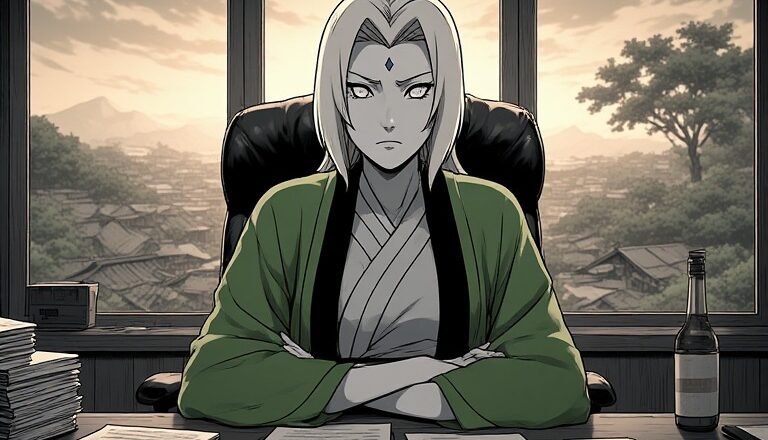
Tsunade’s introduction as the Fifth Hokage represents undeniable progress. She shatters the glass ceiling of Konoha’s leadership, demonstrating that female ninjas can achieve the village’s highest position through recognized capability rather than hereditary claim. Her medical ninjutsu revolutionizes battlefield care, her strength surpasses most male combatants, and her strategic acumen guides the village through its most vulnerable period following the Third Hokage’s death.
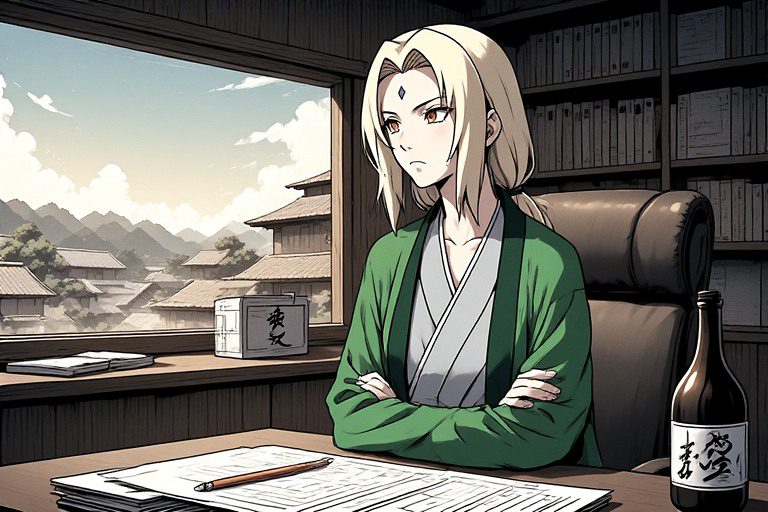
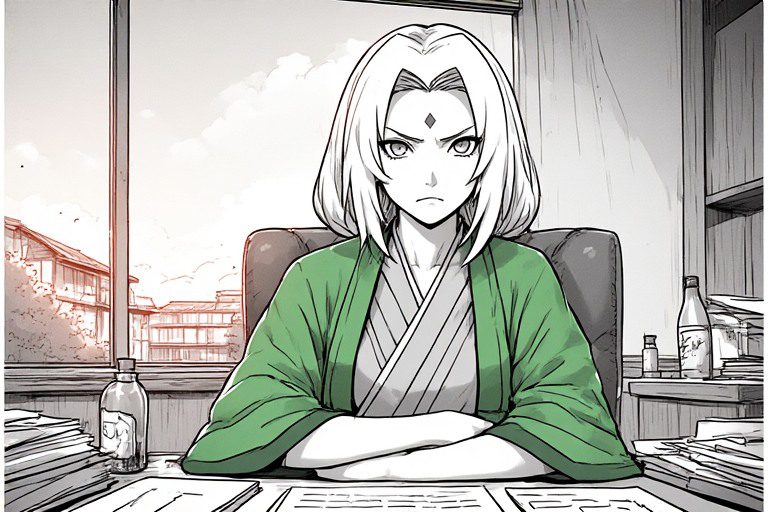
Tsunade’s character specifically challenges the competence versus likability bind that often constrains powerful female characters. She is simultaneously brilliant and alcoholic, compassionate and gambling-addicted, physically dominant and emotionally vulnerable regarding her lost loved ones. These contradictions create human complexity rather than stereotypical perfection, suggesting that female leaders need not be sanitised to deserve respect.
However, Tsunade’s exceptional status reveals systemic problems. She becomes Hokage because no suitable male candidates exist—Jiraiya refuses, Kakashi is deemed too young, other candidates are dead or disgraced. Her appointment carries undertones of emergency substitution rather than earned recognition. The narrative emphasizes her reluctance to accept power, contrasting with male Hokages’ ambition-driven ascension. She leads effectively, but her leadership narrative focuses on overcoming personal trauma (fear of blood, grief for Dan and Nawaki) rather than political vision or strategic innovation.
Tsunade’s eventual coma during Pain’s assault and her diminished role in later arcs suggest that her prominence was narratively tolerated rather than structurally integrated. Once male characters (Kakashi, Naruto) mature sufficiently, the exceptional woman’s necessity fades. This pattern—female leadership as temporary solution until male readiness—recurs throughout political and organizational history, making Tsunade’s case particularly disappointing given the fantasy setting’s potential to imagine alternatives.
Sakura Haruno: The Problematic Protagonist
No Naruto character generates more polarized discussion than Sakura Haruno. Initially presented as the series’ female lead alongside Naruto and Sasuke, she occupies the narrative’s most structurally disadvantaged position. The Team Seven dynamic explicitly mirrors romantic shōjo conventions—two boys competing for one girl’s attention—yet operates within shōnen priorities that consistently subordinate her development to male character arcs.
Lorem Ipsum has been the industry’s standard dummy text ever since the 1500s.
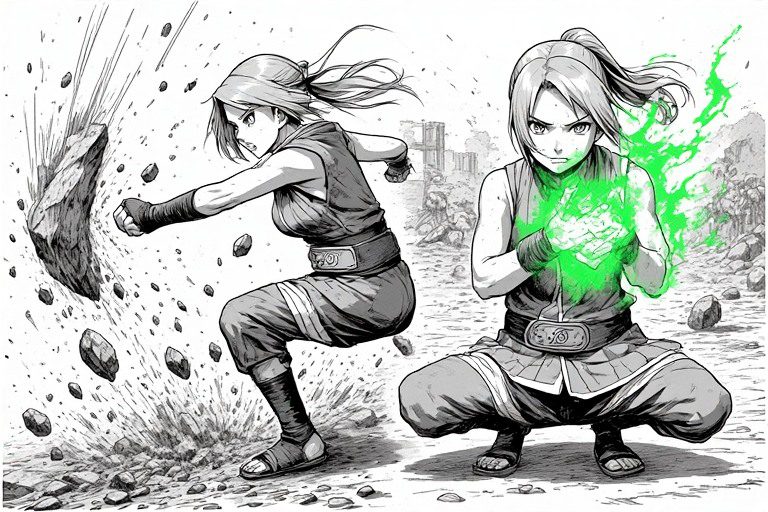
Sakura’s early characterization relies heavily on stereotypical femininity that the series simultaneously presents and punishes. Her obsession with Sasuke’s appearance, her dismissive treatment of Naruto, her emotional volatility, and her comparative weakness in combat establish her as object of male desire and target of audience contempt. The “Inner Sakura” conceit—her aggressive internal monologue expressed through comedic visual—acknowledges her suppressed capability while containing it within acceptable feminine performance.
The Time Skip (Shippuden) promises transformation. Sakura trains under Tsunade, achieving genuine medical expertise and superhuman strength. Her defeat of Sasori alongside Chiyo demonstrates tactical intelligence and combat effectiveness. For approximately fifty chapters, she appears positioned as genuine equal to her male teammates.
This promise collapses through structural narrative choices. Sakura’s confession to Naruto—manipulative rather than genuine—damages her moral standing. Her inability to kill the Sasuke-impostor during the Five Kage Summit arc demonstrates continued emotional dependence overriding tactical necessity. Most critically, her famous “I caught up to them” declaration preceding the Fourth Great Ninja War proves immediately hollow as she requires rescue and operates primarily as healer rather than combatant alongside Naruto and Sasuke’s god-tier escalation.
Kishimoto’s own admissions illuminate these limitations. In multiple interviews, he acknowledged difficulty writing female characters, uncertainty regarding romantic subplot resolution, and surprise at Sakura’s unpopularity. These statements reveal unconscious bias—structural exclusion of female perspective from creative imagination—that produced Sakura’s inconsistent development without deliberate malice but with consistent effect.
Hinata Hyūga: Quiet Strength and Romantic Reward
Hinata’s trajectory presents alternative female characterization that nonetheless reinforces concerning patterns. Introduced as painfully shy, physically weak, and romantically fixated on Naruto, she initially appears as anti-Sakura—supportive rather than dismissive, gentle rather than aggressive, consistently kind rather than emotionally volatile. Her “failures”—inability to declare feelings, defeat in combat, familial rejection—generate sympathy through vulnerability rather than frustration through incompetence.
Lorem Ipsum has been the industry’s standard dummy text ever since the 1500s.
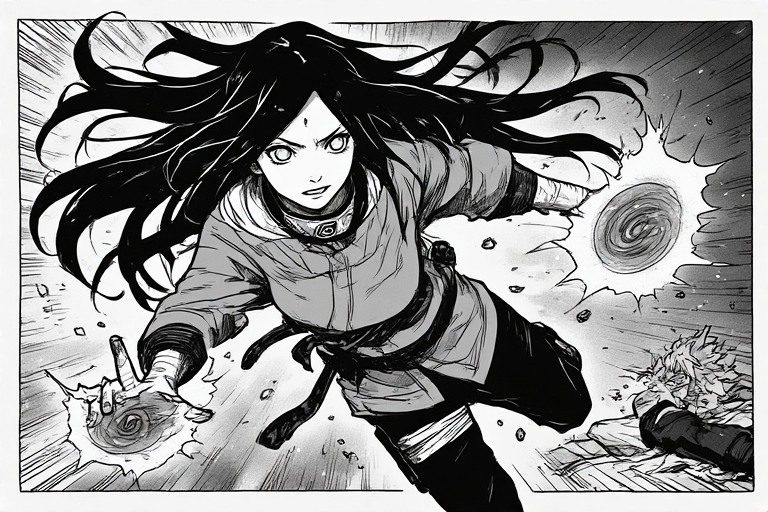
Hinata’s development demonstrates genuine narrative care. Her defeat by Neji during the Chūnin Exams, followed by Naruto’s blood-oath response, establishes emotional stakes that transcend romantic comedy. Her training montages, though brief, suggest determined effort. The Pain assault—where she finally declares love while attacking impossibly superior opponent—represents character culmination: courage expressed through sacrifice rather than victory.
However, Hinata’s defining moment requires defeat. She doesn’t save Naruto; she intervenes to be defeated in his place, providing emotional catalyst for his subsequent transformation. Her later role in the Fourth Great Ninja War, while substantial, operates through support—locating Naruto’s scattered chakra, providing emotional encouragement—rather than independent achievement. The narrative rewards her persistence with romantic fulfillment (marriage, children, domestic happiness) rather than personal ambition realization.
Hinata’s eventual role as housewife and mother, while not inherently diminishing, contrasts sharply with her early narrative promise. The Naruto epilogue and Boruto sequel depict her having abandoned active shinobi status entirely, her Byakugan and combat training reserved for family protection rather than professional application. This trajectory—female capability demonstrated primarily to deserve male partnership, then retired upon partnership achievement—reflects traditional gender scripts that the series might have challenged.
Systemic Patterns: What the Series Missed
Beyond individual character analysis, Naruto exhibits structural patterns limiting female representation. The Smurfette Principle operates across team compositions: Team Seven (two males, one female), Team Eight (two males, one female), Team Ten (two males, one female), Team Guy (three males, one female). This ratio suggests that female presence is tokenistically necessary but numerically subordinate.
Lorem Ipsum has been the industry’s standard dummy text ever since the 1500s.
Combat capability escalation disproportionately favors male characters. The series’ power progression—from skilled ninja to nature-manipulating superhumans to reality-warping demigods—occurs almost exclusively through male characters. Female characters’ power ceilings remain distinctly lower: Tsunade’s strength, while impressive, doesn’t compete with Madara’s meteor summoning; Sakura’s medical expertise, while valuable, doesn’t reshape battlefields like Naruto’s tailed beast mode; Konan’s paper techniques, while innovative, fall before Obito’s space-time manipulation.
Romantic subordination consistently overrides professional development. Female characters’ emotional arcs focus primarily on male-directed feelings—Sakura’s Sasuke obsession, Hinata’s Naruto devotion, Ino’s competitive rivalry transitioning to Sai attraction, Tenten’s undefined interest in Neji/Lee dynamics. Rare exceptions like Temari, who maintains political leadership in Sunagakure while marrying Shikamaru, demonstrate that integration is possible but not prioritized.
Contemporary Relevance and Franchise Evolution
Examining Naruto‘s female representation in 2026 requires acknowledging both progress and stagnation. Compared to 1990s shōnen predecessors, Naruto offers more prominent female characters with occasional genuine capability demonstration. Compared to contemporary standards—or to Kishimoto’s own potential given his narrative sophistication regarding male characters—the series falls conspicuously short.
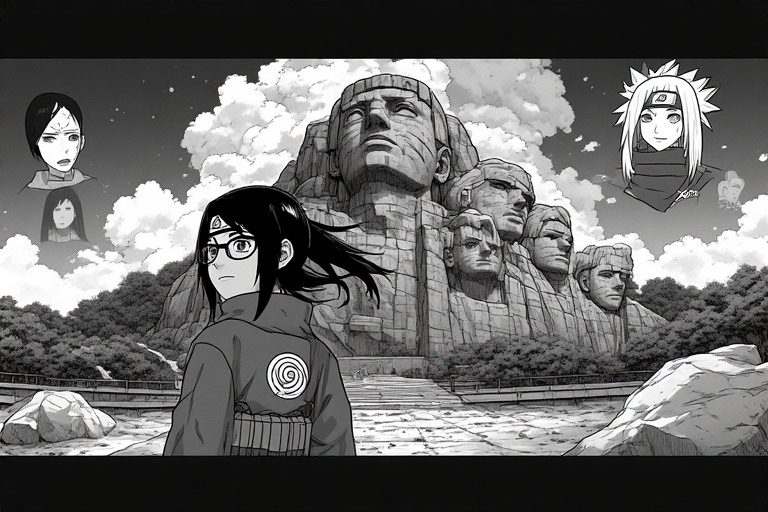
The Boruto sequel’s female characters (Sarada Uchiha, Himawari Uzumaki, Chocho Akimichi) demonstrate incremental improvement without fundamental transformation. Sarada specifically inherits her father’s combat genius and her mother’s medical potential, with explicit ambition toward Hokage position. Whether this potential receives fulfillment or replication of maternal disappointment remains unresolved.
Critical engagement with Naruto‘s female characters serves necessary function: celebrating Tsunade’s leadership, acknowledging Hinata’s courage, recognizing Sakura’s intermittent competence, while insisting that these exceptions should have been norms. The series’ legacy includes both what it achieved and what it failed to imagine—female characters whose narratives weren’t subordinated to male development, whose romantic lives complemented rather than replaced professional ambition, whose presence transformed from token inclusion to genuine equality.
In this critical honesty, we honor both the characters who deserved better and the audiences who recognized their potential.