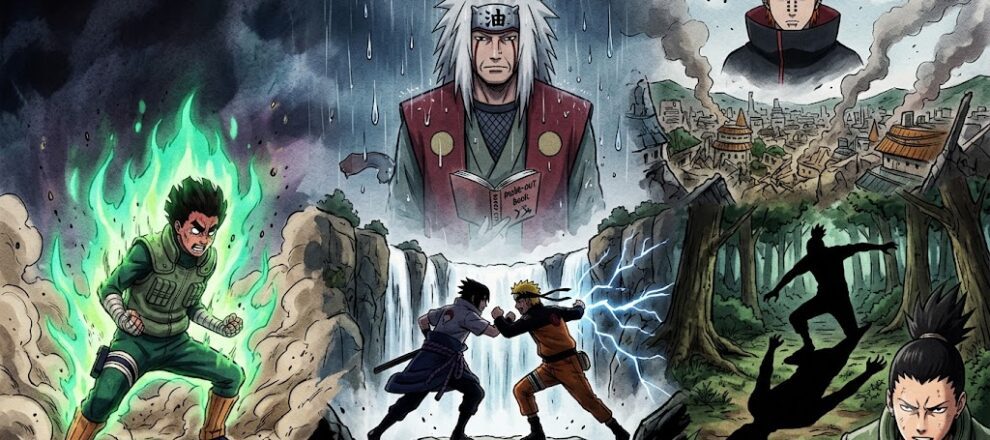
One of Naruto‘s most distinctive achievements is its elaborate combat system that transforms mystical ninja abilities into something approaching internal consistency. Unlike magic systems that rely on arbitrary rules or unlimited power escalation, Kishimoto’s jutsu framework attempts grounding in pseudo-scientific principles—biological energy manipulation, elemental transformation, and genetic inheritance—that reward attentive viewers while remaining accessible to casual audiences. This article examines how chakra mechanics function, where the system achieves genuine coherence, and where narrative convenience overrides established logic.
Chakra: The Foundation of All Jutsu
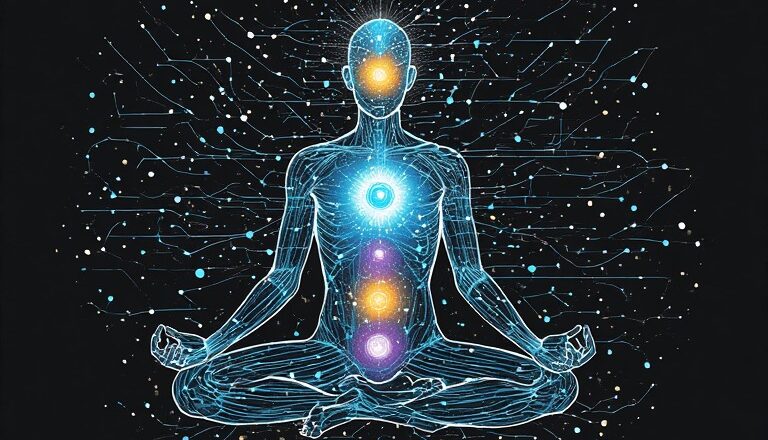
At Naruto‘s combat foundation lies chakra, defined as the fusion of physical energy (drawn from the body’s cells) and spiritual energy (derived from consciousness and experience). This dual origin immediately distinguishes chakra from generic “magic power” in fantasy literature. It requires both bodily cultivation and mental discipline, explaining why ninja training encompasses physical conditioning, meditation, and tactical study.
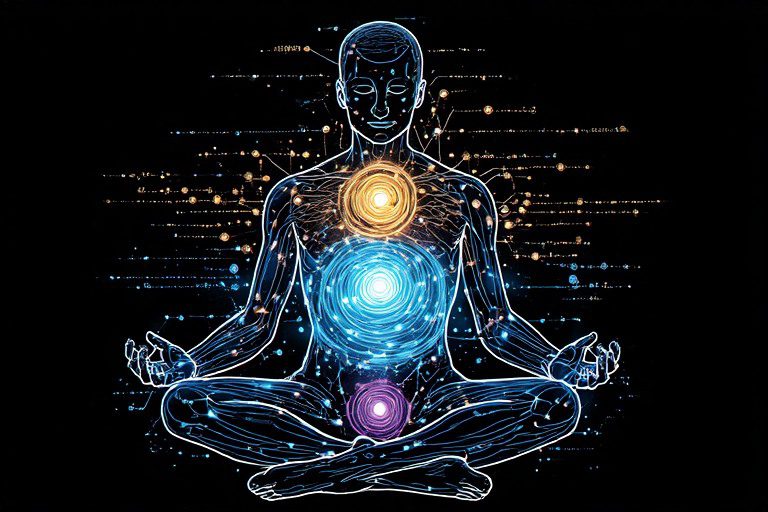
Chakra circulates through tenketsu (chakra points)—361 specific nodes along the body’s pathway network analogous to acupuncture meridians in traditional East Asian medicine. The Eight Gates system, which limits chakra flow to prevent bodily damage, references this medical tradition while adding combat functionality. Opening gates removes safety limits, enabling temporary superhuman performance at catastrophic physical cost—a mechanical explanation for “powering up” that maintains narrative stakes through genuine consequence.
Hardcore fans appreciate chakra’s finite nature. Unlike systems where protagonists access unlimited reserves, Naruto consistently emphasizes depletion. Characters exhaust chakra, requiring rest, food, or medical intervention. This limitation creates tactical depth: fights become resource management problems where technique selection, conservation, and timing matter as much as raw power. The Akimichi clan’s Three Colored Pills, which convert body mass to chakra, or the Aburame clan’s insect-stored reserves, demonstrate how different cultures solve the universal constraint.
For newcomers, understanding chakra’s dual origin explains character capabilities. Naruto’s enormous chakra reserves derive partly from the Nine-Tails’ contribution, but equally from his relentless physical training and indomitable will—spiritual energy cultivated through overcoming isolation. This integration of power source with character development distinguishes Naruto from systems where strength arrives through external acquisition alone.
Nature Transformation: Elemental Physics
Chakra’s second layer involves nature transformation—converting raw energy into elemental properties. The five basic natures (Fire, Water, Earth, Wind, Lightning) operate through both symbolic association and pseudo-physical mechanics that reward analysis.
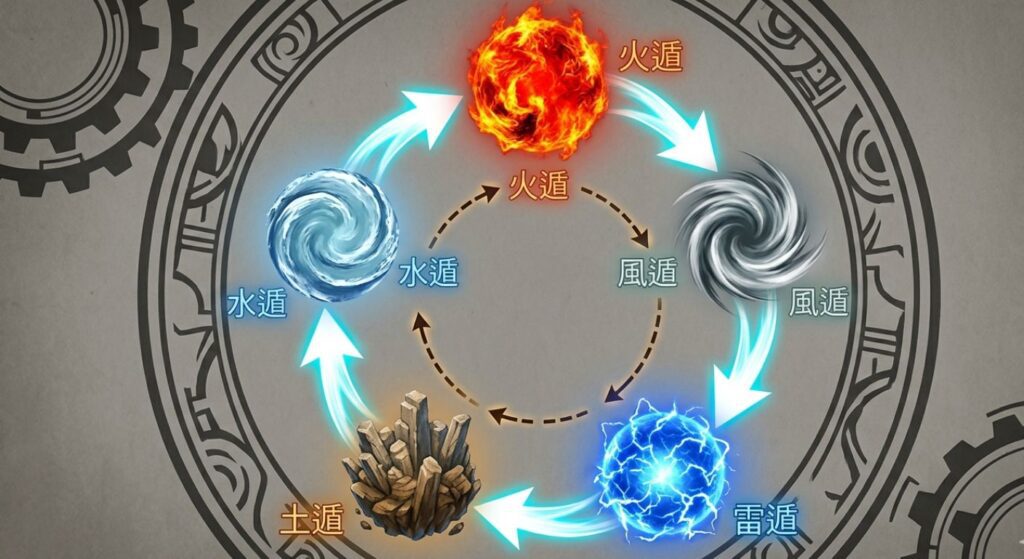
Fire Release accelerates chakra’s molecular vibration, generating combustion. This explains why Fire techniques require breath control (oxygen supply) and why they’re particularly effective against Wind (which feeds flames) but weak against Water. Sasuke’s Fireball Jutsu and Itachi’s black flames (Amaterasu) demonstrate the spectrum from conventional combustion to supernatural intensity through chakra quality rather than mechanical difference.
Water Release converts chakra into hydrogen-oxygen composition, typically extracted from atmospheric moisture or existing sources. This explains why Water techniques fail in deserts (Suna advantage) and why advanced users like Tobirama or Kisame can generate massive quantities through personal reserves. The Second Hokage’s ability to create water without visible sources suggests either extreme chakra density or undisclosed hydration storage—an ambiguity the series never fully resolves.
Earth Release manipulates soil density and composition, functioning as matter transformation rather than generation. This explains why Earth techniques require existing ground contact and why they’re effective against Water (absorption) but vulnerable to Lightning (conductivity disruption). The Tsuchikage’s Particle Style transcends this category, converting matter to energy at molecular levels—a kekkei tōta (bloodline expansion) beyond conventional nature transformation.
Wind Release creates cutting pressure through chakra’s rapid, directional movement. This explains why Wind techniques excel at piercing (Rasengan’s drilling property) and why they’re effective against Lightning (dispersion) but weak against Fire (fuel provision). Naruto’s Wind Style: Rasenshuriken demonstrates the technique’s extreme development—compressing wind chakra to microscopic scales that damage at cellular levels.
Lightning Release generates electrical charge through chakra’s ionization. This explains why Lightning techniques require grounding considerations, why they’re effective against Earth (conductivity), and why they’re weak against Wind (dispersion). Sasuke’s Chidori and its variants demonstrate the style’s piercing focus, while the Third Raikage’s Lightning Armor shows defensive application through chakra’s interaction with nervous system acceleration.
The circle of weaknesses (Fire > Wind > Lightning > Earth > Water > Fire) provides strategic framework without rigid determinism. Superior chakra control, tactical positioning, or technique innovation can overcome elemental disadvantage—Kakashi’s Lightning Cutter defeating Earth techniques through focused penetration rather than elemental superiority.
Kekkei Genkai: Genetic Specialization
Beyond basic nature transformation, kekkei genkai (bloodline limits) represent inherited abilities combining multiple natures or enabling unique biological functions. These genetic traits create clan-based power structures that shape Naruto‘s social and political landscape.
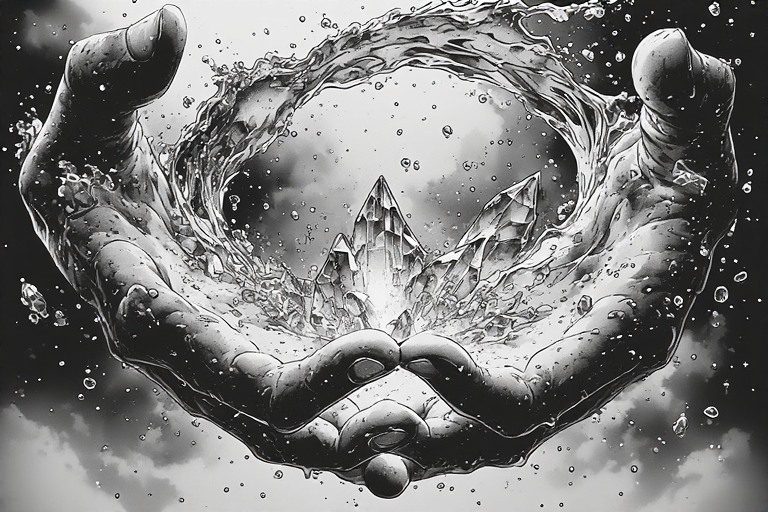
Elemental kekkei genkai combine two natures into new substances. Wood Release (Earth + Water), possessed exclusively by Hashirama Senju and later Yamato/Zetsu, creates living vegetation with chakra absorption properties. Ice Release (Water + Wind), appearing in Haku and later Yuki clan descendants, generates freezing structures with unusual durability. Lava Release (Earth + Fire), Magnet Release (Earth + Wind), and Storm Release (Water + Lightning) similarly demonstrate combination possibilities that expand tactical options beyond individual natures.
These combinations follow pseudo-chemical logic—Earth and Water producing organic growth, Water and Wind creating temperature reduction—that grounds fantasy in recognizable physical processes. The rarity of these combinations (requiring genetic compatibility for simultaneous nature manipulation) explains why they’re clan-specific and why attempts to replicate them artificially (Orochimaru’s experiments, Danzō’s grafting) produce unstable results.
Dōjutsu (eye techniques) represent distinct kekkei genkai category involving ocular mutation. The Byakugan’s 360-degree vision and chakra pathway perception, the Sharingan’s copying and predictive capabilities, and the Rinnegan’s six-path mastery each demonstrate biological specialization that enables unique combat applications. These abilities’ genetic transmission creates the clan-focused politics driving much of Naruto‘s conflict—the Uchiha’s persecution, the Hyūga’s main/branch house system, Nagato’s unusual Rinnegan acquisition.
Hardcore fans note that dōjutsu evolution follows biological logic despite supernatural presentation. The Sharingan’s progression from single tomoe to Mangekyō pattern reflects neurological stress response—extreme emotional trauma triggering structural change. The Mangekyō’s eventual blindness and bleeding suggests biological cost for supernormal function, while Eternal Mangekyō transplantation represents surgical intervention for degenerative condition. The Rinnegan’s appearance in Madara’s old age and its reactivation in specific hosts suggests genetic compatibility requirements that the series explores through Obito and Nagato’s unusual cases.
The Nonsense: Where Consistency Breaks Down
Despite its sophistication, Naruto‘s system contains deliberate and accidental inconsistencies that hardcore fans catalog and newcomers may find confusing.

Power escalation inflation eventually overwhelms established mechanics. Early Naruto emphasizes chakra limitation, tactical ingenuity, and technique diversity. Late-series battles involving tailed beasts, Susanoo manifestations, and planetary-scale attacks render conventional jutsu irrelevant. The Rasengan’s evolution from A-rank technique requiring clone assistance to mass-producible, variable-element projectile demonstrates this inflation—impressive spectacle that undermines earlier constraints.
Nature transformation rarity fluctuates arbitrarily. Initially, nature manipulation requires significant training (Kakashi’s explanation that most jonin master two natures). Later, characters demonstrate multiple natures without explanation, and the nature transformation requirement for Rasengan completion becomes optional through sheer determination. This flexibility serves narrative convenience but damages systematic integrity.
Genetic determinism raises uncomfortable implications. Kekkei genkai’s clan exclusivity suggests biological essentialism—innate capability determined by birth rather than effort. The narrative occasionally challenges this (Lee’s taijutsu mastery despite no ninjutsu capability, Naruto’s eventual success despite non-elite heritage), but generally reinforces that exceptional power derives from exceptional lineage. The Ōtsutsuki clan’s cosmic introduction as chakra originators further centralizes genetic hierarchy.
Female character chakra limitations appear inconsistently applied. Tsunade’s medical ninjutsu and Sakura’s subsequent development suggest that precise chakra control compensates for smaller reserves—an interesting mechanical distinction that the series never fully explores because male characters simultaneously demonstrate both enormous reserves and perfect control.
Conclusion: Functional Fantasy
Naruto‘s jutsu system succeeds not through perfect consistency but through functional coherence—establishing rules that enable satisfying narrative development even when later bent or broken. Chakra’s finite nature creates early-series tension; nature transformation’s elemental logic enables strategic storytelling; kekkei genkai’s genetic basis generates political complexity. These foundations support hundreds of chapters and episodes before escalation inflation renders them obsolete.
For newcomers, the system’s accessibility—understandable through basic concepts of energy, elements, and inheritance—lowers entry barriers while promising depth for committed engagement. For hardcore fans, the system’s partial coherence rewards analysis, theory-crafting, and the identification of patterns that genuine nonsense would prevent.
The “science” in Naruto‘s science-and-nonsense ultimately serves character and theme. Chakra limitation forces creative problem-solving; elemental diversity enables personality expression through combat style; genetic inheritance interrogates destiny versus effort. These connections between mechanical system and narrative meaning constitute Naruto‘s lasting contribution to fantasy combat design—demonstrating that even “nonsense” benefits from underlying structure that respects audience intelligence.