The transition from a beloved franchise to its generational successor represents one of entertainment’s most precarious challenges. When Naruto concluded in 2014 after fifteen years of publication, Masashi Kishimoto had crafted one of manga’s most complete narratives—transforming a brash orphan into a celebrated leader while resolving conflicts spanning generations. The 2016 launch of Boruto: Naruto Next Generations, initially supervised by Kishimoto before transitioning to Ukyō Kodachi and later Mikio Ikemoto, attempted continuing this legacy through the next generation. Five years into its run, Boruto remains deeply divisive among the fanbase, demonstrating both the possibilities and pitfalls of generational storytelling in long-form serial narrative.
The Successes: Nostalgic Continuity and Character Evolution
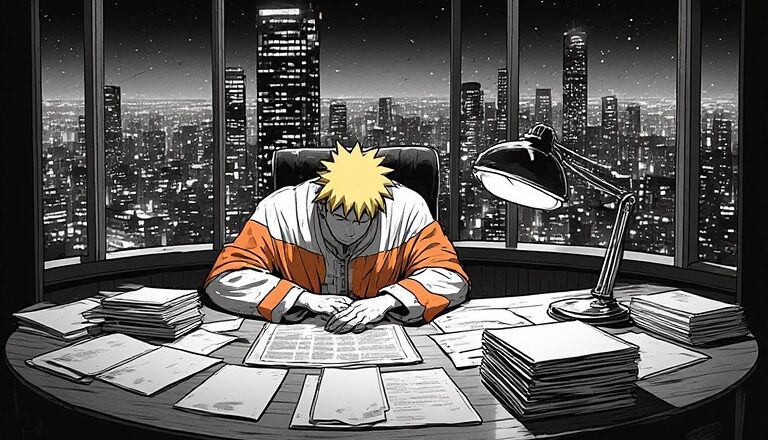
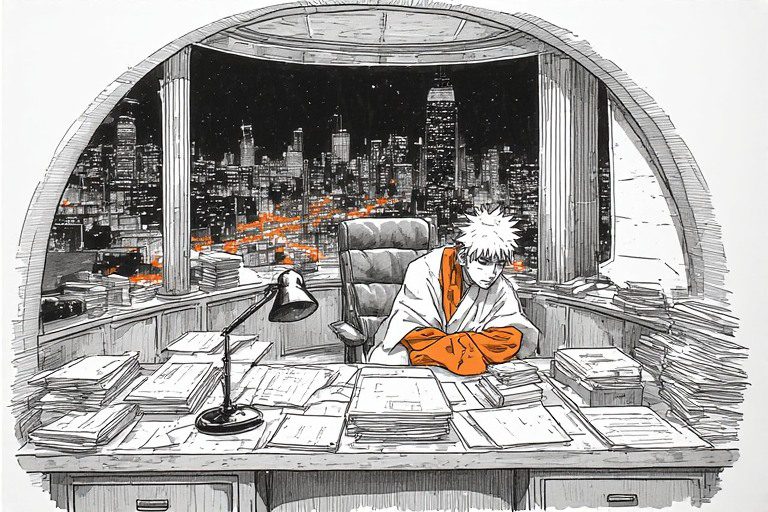
Boruto‘s most undeniable achievement lies in its treatment of legacy characters. Naruto Uzumaki’s transformation from impulsive protagonist to overworked Hokage, struggling to balance administrative responsibility with family presence, demonstrates sophisticated character evolution that honors original series development while acknowledging adult reality. The Seventh Hokage’s exhaustion, his missed birthdays and postponed promises, reflects genuine thematic continuity—Naruto’s childhood isolation now informing his imperfect parenting, his desperate desire for connection producing overcommitment that paradoxically generates the same neglect he experienced.
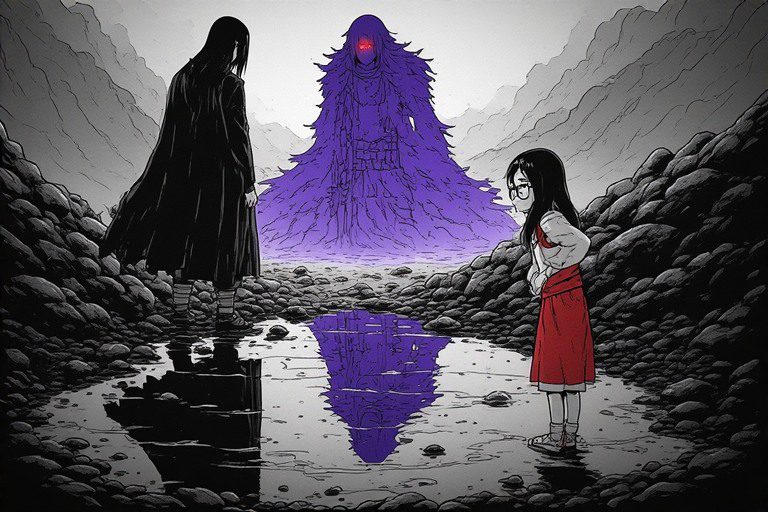
Sasuke Uchiha’s parallel evolution proves equally compelling. The wandering shinobi, absent from his family for years while investigating dimensional threats, embodies the logical extension of his original-series trajectory—someone who sacrificed everything for connection now sacrificing connection for protection. His relationship with Sarada, strained by absence yet genuine when present, explores how trauma survivors transmit damage despite protective intentions.
The generational conflict between these fathers and their children generates Boruto‘s most resonant material. Boruto’s resentment of Naruto’s absenteeism, Sarada’s complicated admiration for Sakura’s strength and Sasuke’s mystery, and the eventual recognition that parental heroism created different but equally valid wounds—the these dynamics validate Boruto‘s existence beyond commercial exploitation. They suggest that victory in the original series produced new problems requiring new solutions, that happy endings contain seeds of subsequent challenges.
The Failures: Power Escalation and Narrative Inflation
Where Boruto struggles most conspicuously involves power scaling and threat inflation. The original Naruto concluded with god-tier combat—planetary-scale attacks, reality-warping abilities, dimensional manipulation—that left minimal room for escalation without absurdity. Boruto‘s introduction of Ōtsutsuki clan members as recurring antagonists, interdimensional travel, and cyborg enhancements (the Kara organization) attempts maintaining stakes through escalation but frequently produces narrative incoherence.
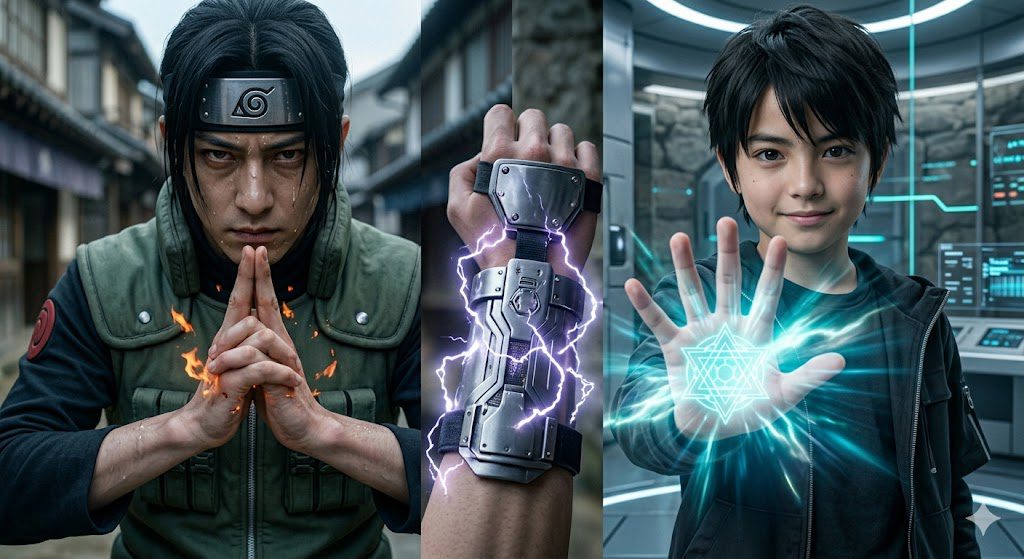
The original series’ power progression, however exaggerated, maintained internal logic through training, sacrifice, and incremental development. Boruto‘s protagonist acquires comparable capability through genetic inheritance (Jougan eye, Karma seal) and external implantation rather than earned growth. This shortcutting undermines the thematic foundation that made Naruto compelling—the conviction that determination and effort could overcome natural disadvantage. Boruto begins with advantages his father never possessed, making his struggles feel less consequential despite narrative insistence otherwise.
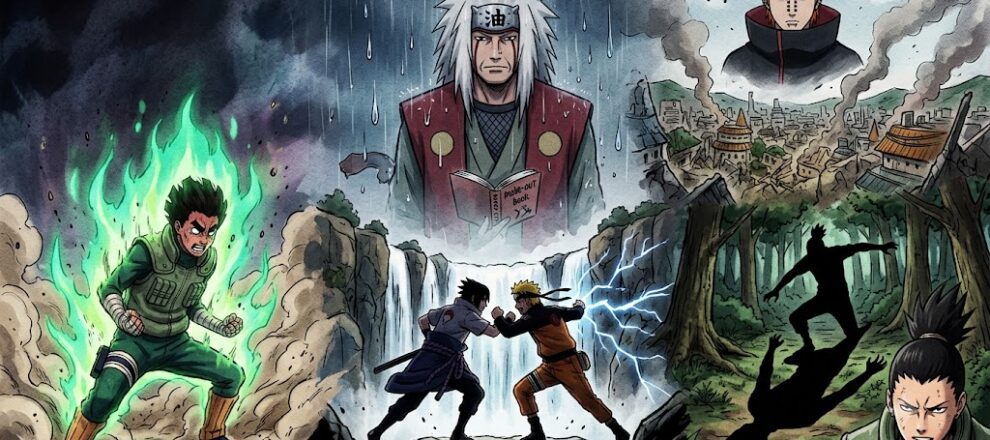
Furthermore, the threat scale’s expansion paradoxically diminishes emotional investment. When every conflict risks planetary destruction, individual stakes dissolve into abstraction. The original Naruto‘s most effective moments involved personal consequences—Zabuza’s redemption, Gaara’s isolation, Jiraiya’s death—rather than existential scale. Boruto‘s dimensional threats and alien invasions, however visually impressive, rarely achieve comparable emotional weight because the consequences feel too vast to comprehend personally.
The Division: Fanbase Perspectives
Fanbase division regarding Boruto reflects fundamental disagreements about sequel purpose and generational storytelling ethics. Three primary perspectives dominate discourse:
Continuation Advocates appreciate Boruto‘s extension of familiar universe, arguing that any additional time with beloved characters justifies the project regardless of quality comparison. They emphasize the original cast’s adult development, the pleasure of seeing next-generation dynamics, and the legitimate creative challenge of continuing concluded narrative. For this group, Boruto‘s existence itself constitutes success—more Naruto, however different, remains preferable to absence.
Comparative Critics evaluate Boruto against its predecessor’s achievements, finding consistent diminishment. They note pacing problems, animation quality inconsistencies, the marginalization of female characters even beyond original-series limitations, and the replacement of earned development with inherited capability. This group acknowledges Boruto‘s occasional successes but considers them exceptions proving general inferiority, arguing that the sequel damages original legacy through association with mediocrity.
Independent Evaluators attempt assessing Boruto as standalone work, separate from franchise obligations. This perspective recognizes genuine strengths—Sarada Uchiha’s characterization, occasional animation excellence, the Kawaki arc’s psychological complexity—while acknowledging structural weaknesses inherent to post-god-tier storytelling. However, this group’s minority status demonstrates how thoroughly Boruto remains defined by its predecessor; independence from Naruto comparison proves practically impossible given narrative continuity.
Structural Challenges: The Weight of Inheritance
Boruto faces structural obstacles that explain its difficulties without excusing them. The original Naruto‘s conclusion resolved its central conflicts so thoroughly that subsequent threats require either retconning established victory (alien threats ignored during previous planetary crises) or diminishing achieved peace (new organizations emerging despite unified shinobi world). Neither approach satisfies fans invested in original-series resolution.
The generational structure creates additional complications. Boruto must simultaneously distinguish himself from his father (requiring different personality, different conflicts, different capabilities) while justifying his protagonist status through comparable importance. The series’ solution—making Boruto’s struggles explicitly about escaping paternal shadow—addresses this tension thematically but doesn’t resolve narrative challenges. Every Boruto achievement occurs within Naruto’s established context; every failure reflects on legacy character parenting.
The manga-anime adaptation relationship further complicates reception. Boruto‘s anime includes extensive original content (anime-only arcs) that expands character development but dilutes narrative momentum. The manga’s monthly publication schedule produces slower story progression than weekly original Naruto, testing fan patience. These production realities, while externally imposed, nonetheless shape audience experience and critical evaluation.
Comparative Context: Generational Storytelling Successes
Evaluating Boruto benefits from comparison with other franchise continuations. Dragon Ball Super similarly struggled with power escalation post-god-tier conclusion but maintained audience through creator return and nostalgic character focus. My Hero Academia: Vigilantes demonstrates successful spin-off through genre shift and perspective change rather than direct continuation. Jujutsu Kaisen‘s prequel film (Jujutsu Kaisen 0) expands universe without requiring ongoing generational narrative.
These comparisons suggest that Boruto‘s specific approach—direct generational continuation with same-setting, escalated-threat storytelling—may be inherently problematic rather than merely executionally flawed. The original Naruto concluded with such comprehensive resolution that any direct continuation requires either undoing that conclusion or diminishing its significance through subsequent crisis inflation.
Conclusion: The Unresolvable Torch
Five years into its run, Boruto remains caught between impossible obligations: honoring original legacy while establishing independent identity, satisfying nostalgic fans while attracting new audiences, maintaining narrative stakes without power-escalation absurdity. Its occasional successes—Sarada’s ambition, Kawaki’s integration, adult Naruto’s complexity—demonstrate that generational storytelling contains genuine potential. Its consistent struggles—threat inflation, inherited capability, structural comparison—reveal the fundamental difficulty of continuing what was designed to conclude.
The fanbase division itself constitutes Boruto‘s most telling legacy. Unlike universally dismissed sequels or universally embraced continuations, Boruto generates genuine disagreement about value and purpose. This suggests that the project touches authentic concerns regarding narrative inheritance, generational change, and the ethics of extending beloved stories. Whether Boruto eventually achieves coherent identity or remains forever measured against its predecessor, it has demonstrated that passing the torch requires more than narrative continuation—it demands reconceptualizing what made the original flame worth carrying.
For Naruto fans, Boruto offers uncomfortable mirror: the recognition that our desire for more content conflicts with our appreciation for concluded artistry, that our love for characters makes their continued exploitation feel simultaneously welcome and violating. The Seventh Hokage’s exhaustion, struggling to fulfill responsibilities that exceed any individual’s capacity, perhaps unintentionally embodies the franchise’s own predicament—carrying forward a legacy that has become, despite best intentions, perhaps too heavy to sustainably bear.