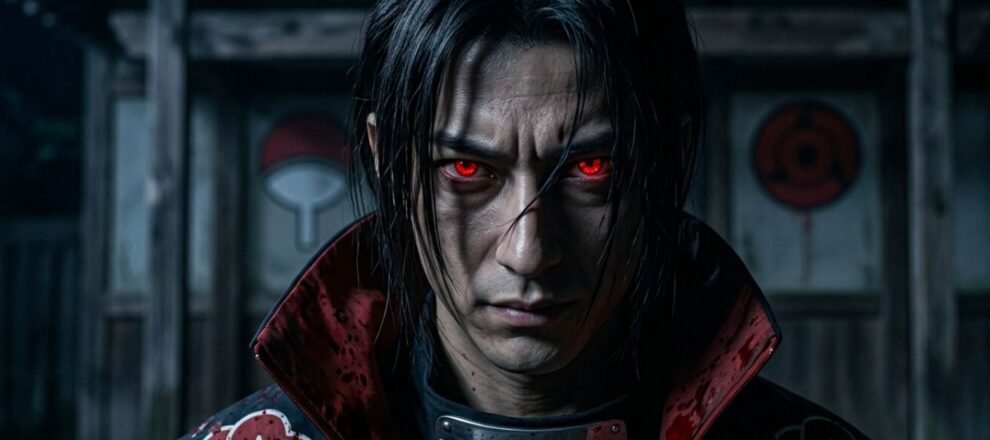
Masashi Kishimoto’s Naruto stands as one of the most successful manga and anime franchises in history, captivating millions across generations. At its heart lies a protagonist whose journey from ostracized orphan to respected leader offers rich territory for psychological exploration. Naruto Uzumaki’s character arc isn’t merely entertaining fiction—it represents a sophisticated narrative of trauma recovery, attachment formation, and identity development that resonates deeply with real-world psychological principles.
The Trauma of Early Childhood: Rejection and Isolation
Naruto’s origin story contains layers of trauma that would cripple most individuals. Born minutes before his parents’ heroic sacrifice to seal the Nine-Tailed Fox within him, he entered the world already marked as dangerous. The Third Hokage’s decree that Naruto’s jinchūriki status remain secret ironically ensured his suffering—villagers knew something was wrong with him without understanding what, generating fear that manifested as systematic exclusion.
From a developmental psychology perspective, Naruto’s early years represent a nightmare scenario. Research consistently demonstrates that infant attachment to caregivers fundamentally shapes social and emotional development. Naruto had no caregivers. No parents, no foster family, no consistent adult presence. He lived alone in an apartment from approximately age six, receiving minimal welfare support and maximum social rejection.
This isolation created what attachment theorists would recognize as disorganized attachment patterns. Naruto simultaneously craved connection and expected rejection. His early behavior—pranks, vandalism, disruptive attention-seeking—reflects classic symptoms of children who have learned that negative attention surpasses no attention whatsoever. When villagers looked at him with hatred, at least they acknowledged his existence.
The psychological weight of this isolation manifests in Naruto’s earliest stated goal: becoming Hokage not to serve the village, but to force its recognition. “I’m going to be Hokage, believe it!” functions simultaneously as ambition and defense mechanism. By elevating his aspirations impossibly high, Naruto protects himself from the vulnerability of wanting ordinary acceptance that might never come.
The Turning Point: Iruka and the Possibility of Connection
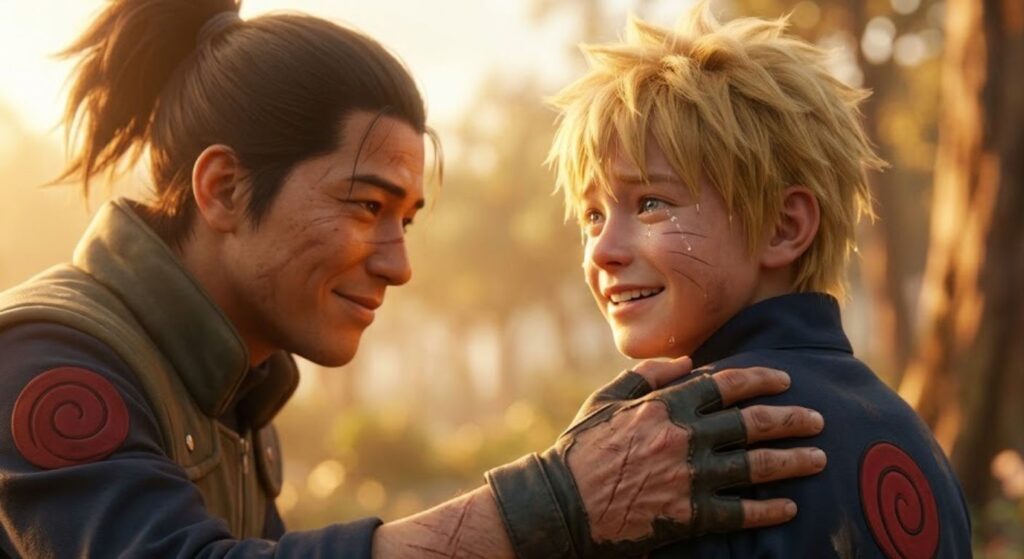
Naruto’s psychological trajectory shifts dramatically through his relationship with Iruka Umino. As his Academy instructor and eventual mentor, Iruka represents Naruto’s first experience of unconditional positive regard—acceptance not contingent on performance, compliance, or worthiness. Critically, Iruka initially shared the village’s prejudice against Naruto, having lost his own parents to the Nine-Tails’ attack. His eventual recognition of Naruto’s humanity—his choice to see the child rather than the container—models the psychological flexibility that Naruto himself will later develop.
This relationship demonstrates what trauma researchers call earned secure attachment. Iruka doesn’t immediately transform Naruto; rather, he provides consistent presence through multiple rejections, gradually building the trust that allows Naruto to internalize a sense of being worthy of love. When Iruka risks his life protecting Naruto from Mizuki, he performs the attachment function that Naruto’s parents couldn’t: demonstrating that someone values him more than their own safety.
The psychological significance of this moment cannot be overstated. For the first time, Naruto experiences being chosen—not tolerated, not managed, but actively protected. This experience creates what psychologists term a “corrective emotional experience,” challenging his core belief that he is fundamentally unlovable and dangerous to others.
Team Seven and Identity Formation
Naruto’s placement on Team Seven accelerates his psychological development through structured peer relationships. Sasuke and Sakura initially represent different aspects of Naruto’s internal conflict: Sasuke embodies the competence and recognition Naruto craves, while Sakura represents the social acceptance he desires but feels unworthy of receiving.
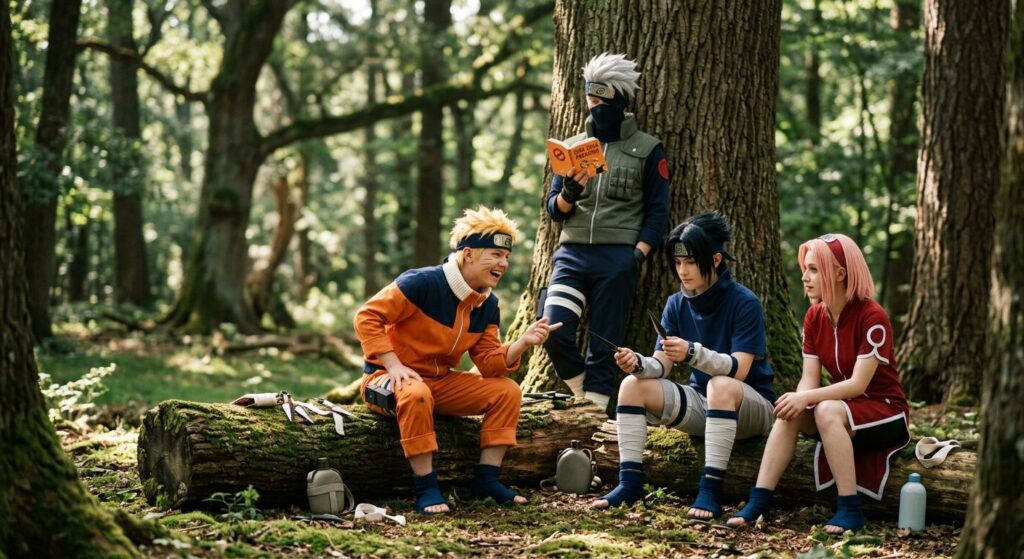
Kakashi Hatake’s mentorship introduces crucial psychological complexity. Unlike Iruka’s unconditional support, Kakashi offers conditional approval based on growth and teamwork. This developmental appropriate challenge pushes Naruto beyond seeking mere recognition toward earning respect through genuine achievement. Kakashi’s revelation that he also knew Naruto’s father adds narrative symmetry while psychologically reinforcing that Naruto’s identity contains hidden worth waiting to be discovered.
The team’s dynamics illustrate social learning theory in action. Naruto observes Sasuke’s skills, Sakura’s intelligence, and Kakashi’s experience, gradually internalizing these models into his developing identity. His competitive drive with Sasuke, often framed as simple rivalry, actually represents healthy narcissistic development—the recognition that another’s excellence doesn’t diminish one’s own potential for greatness.
The Valley of the End: Confronting the Shadow
Naruto’s first major confrontation with Sasuke at the Valley of the End represents a psychological crisis point. Sasuke’s choice to embrace darkness—to seek power through hatred rather than connection—mirrors the path Naruto himself was tempted toward throughout his isolation. In preventing Sasuke’s departure, Naruto isn’t merely saving a friend; he’s actively rejecting his own potential for destructive isolation.
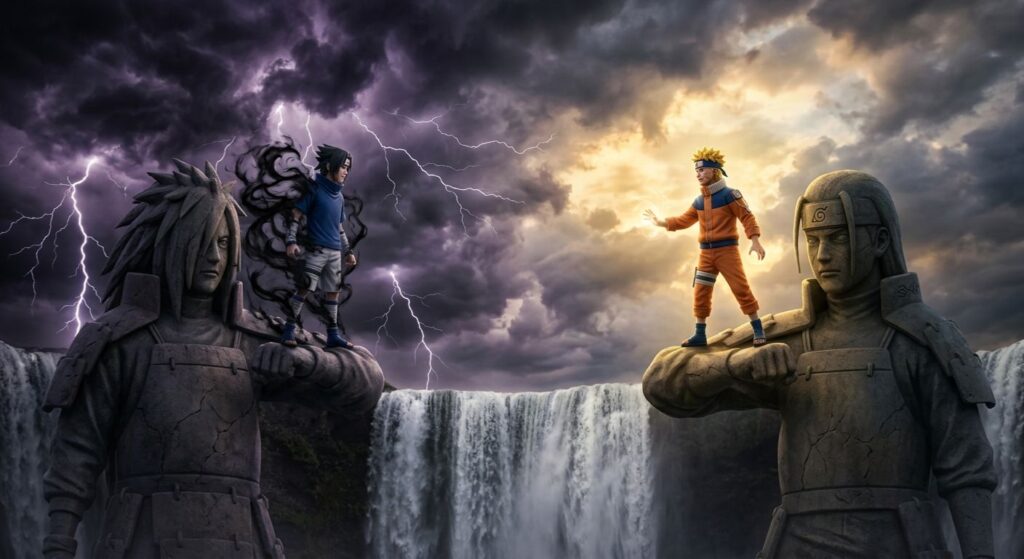
This confrontation introduces what Carl Jung would recognize as shadow integration. Naruto must acknowledge that he contains the same capacity for darkness that drives Sasuke. His victory isn’t physical—he fails to bring Sasuke back—but psychological: he chooses connection over power, hope over despair, even at tremendous personal cost. This choice cements his identity as someone who transforms pain into compassion rather than retaliation.
Mature Interdependence: From Recognition to Service
Naruto’s psychological development culminates in his transformation from someone seeking recognition to someone providing it. His interactions with subsequent jinchūriki—Gaara, Killer Bee, even Obito—demonstrate generativity, Erik Erikson’s term for the adult capacity to guide younger generations and contribute to community welfare.
Particularly significant is Naruto’s relationship with the Tailed Beasts themselves. Where once he feared and suppressed the Nine-Tails’ influence, he eventually achieves internal cooperation—acknowledging this dangerous aspect of himself without being controlled by it. This integration mirrors successful trauma therapy, where survivors learn to carry painful experiences without being defined by them.
His eventual Hokage appointment represents psychological completion not because he finally receives recognition, but because he no longer requires it. Naruto’s leadership emerges from genuine concern for others’ welfare rather than compensation for personal wounds. He has transformed his traumatic isolation into exceptional capacity for empathy, his historical rejection into commitment to inclusion.
Contemporary Relevance: Naruto and Modern Mental Health
Naruto’s character arc offers valuable insights for contemporary discussions about childhood trauma, resilience, and recovery. His story validates that early wounds don’t determine destiny while honestly depicting the difficulty of healing. Naruto doesn’t “get over” his childhood; he builds a meaningful life despite and through it.
For viewers experiencing isolation, rejection, or identity struggles, Naruto’s journey provides narrative modeling—demonstrating that vulnerability, persistence, and connection can transform suffering into strength. His catchphrase “believe it” evolves from defensive bravado to genuine affirmation, modeling the self-fulfilling potential of committed optimism.
The series’ conclusion, showing Naruto as a sometimes-overwhelmed adult balancing leadership with family life, offers perhaps its most psychologically honest moment. Recovery doesn’t produce perfect functioning; it enables meaningful engagement with life’s ongoing challenges. Naruto remains recognizably himself—impulsive, emotionally direct, stubbornly optimistic—while having developed the capacities to deploy these traits constructively.
Conclusion: The Psychology of Belief
Naruto Uzumaki’s transformation from outcast to Hokage succeeds narratively because it reflects genuine psychological processes. His journey illustrates attachment repair, trauma recovery, identity integration, and the development of generative purpose. While embellished with ninja battles and supernatural elements, the emotional architecture remains authentic.
In an era of increasing awareness about childhood trauma, social isolation, and mental health struggles, Naruto’s story offers both validation and hope. It suggests that even profound early wounds can heal through consistent connection, that identity remains malleable throughout development, and that personal suffering can transform into communal contribution.
Naruto doesn’t become Hokage because he was destined for greatness. He achieves leadership because he refused to let his pain determine his values, because he kept seeking connection despite repeated rejection, and because he ultimately chose to believe—in himself, in others, and in the possibility of change. That psychology, more than any jutsu, constitutes his true power.